

.jpg)
When it comes to purchasing a home, one of the most important and often complex parts of the process is understanding mortgages. Whether you're a first-time homebuyer or looking to refinance, getting a grasp on how mortgages work is essential for making informed decisions. At Homelife Power Realty Inc., we pride ourselves on not only helping you find the perfect home but also providing you with the tools and knowledge to navigate the home-buying process.
Here’s everything you need to know about mortgages—from what they are to how to pay them off, and how to choose the right one for your needs.
What is a Mortgage?
A mortgage is a type of loan specifically designed for purchasing real estate. When you take out a mortgage, you borrow money from a lender (typically a bank or credit union) to buy a home. In return, you agree to repay the loan over a period of time—usually 15 to 30 years—through monthly payments. The home you purchase serves as collateral for the loan, meaning if you fail to make payments, the lender can seize the property through a legal process known as foreclosure.
In addition to the principal loan amount, your monthly payment often includes interest, taxes, and insurance, depending on the terms of your mortgage agreement.
.jpg)
How Do I Pay Off the Loan?
Paying off your mortgage is a long-term commitment. Here’s how the process typically works:
-
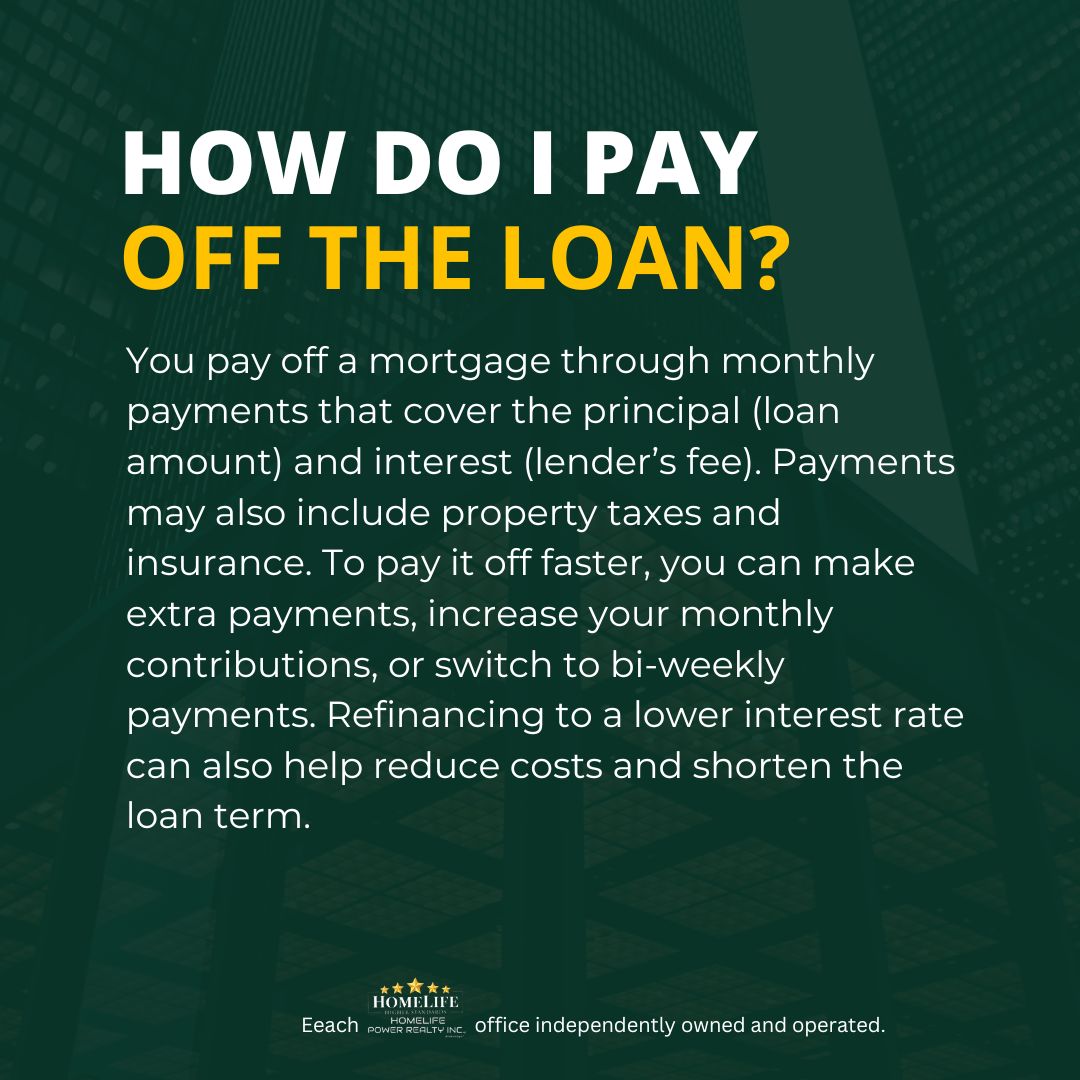
Monthly Payments: The bulk of your mortgage payment is typically divided into two parts: principal and interest. The principal is the original amount you borrowed, and the interest is the fee the lender charges for borrowing the money. In the early years of your mortgage, most of your monthly payment will go toward paying interest, but over time, more will go toward reducing the principal.
-
Amortization Period: The repayment period is typically spread out over 15, 20, or 30 years. As you continue making payments, the loan is "amortized," meaning the principal balance gradually decreases. The term "amortization" refers to the process of gradually reducing the debt through regular payments.
-
Extra Payments and Prepayment Options: Many mortgages allow for extra payments or lump-sum payments that can help reduce your loan balance more quickly, potentially saving you thousands of dollars in interest. Be sure to check with your lender to see if there are any penalties or fees associated with prepayment.
-
Refinancing: Some homeowners may choose to refinance their mortgage to get a lower interest rate, reduce their monthly payments, or shorten the term of their loan. Refinancing involves taking out a new mortgage to pay off the old one, and it can be an excellent option if your financial situation has improved or if market rates are lower.
How Do I Get a Mortgage?
Getting a mortgage can seem daunting, but understanding the steps involved makes it much easier. Here’s what you need to know:
-
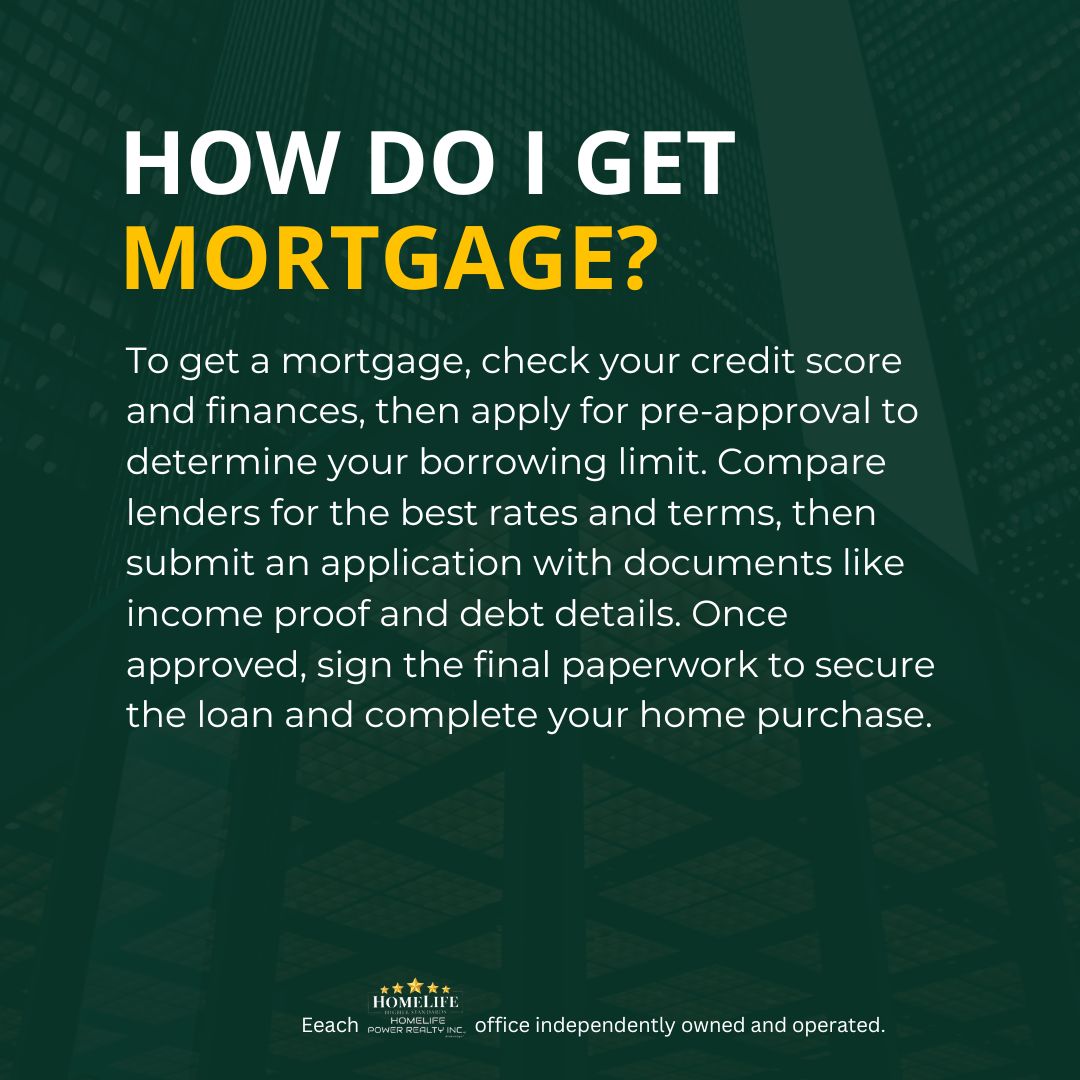
Get Pre-Approved: Before you start house hunting, it's a good idea to get pre-approved for a mortgage. This involves providing your lender with your financial information (income, debts, credit score, etc.) so they can determine how much you’re eligible to borrow. A pre-approval letter shows sellers that you're serious and financially capable of buying a home.
-
Choose a Lender: There are several types of lenders available, including banks, credit unions, and mortgage brokers. It’s important to shop around and compare interest rates, terms, and fees from different lenders to find the best deal.
-
Provide Necessary Documentation: Once you've chosen a lender, you’ll need to submit documents such as proof of income, tax returns, bank statements, and details about your debts and assets. This helps the lender assess your ability to repay the mortgage.
-
Loan Approval Process: After submitting your documentation, the lender will review it and determine whether you qualify for a mortgage. If approved, you’ll receive a loan offer outlining the terms, including the interest rate, loan amount, and repayment schedule.
-
Close on the Loan: Once you accept the loan offer, you’ll move to the closing process, where all paperwork is signed, and the mortgage is officially finalized. At this point, the lender will provide the funds, and you’ll officially become a homeowner.
What Kind of Mortgage Should I Get?
In Ontario, there are several types of mortgages, each with its own advantages depending on your financial goals and circumstances. Here are the most common options:
-
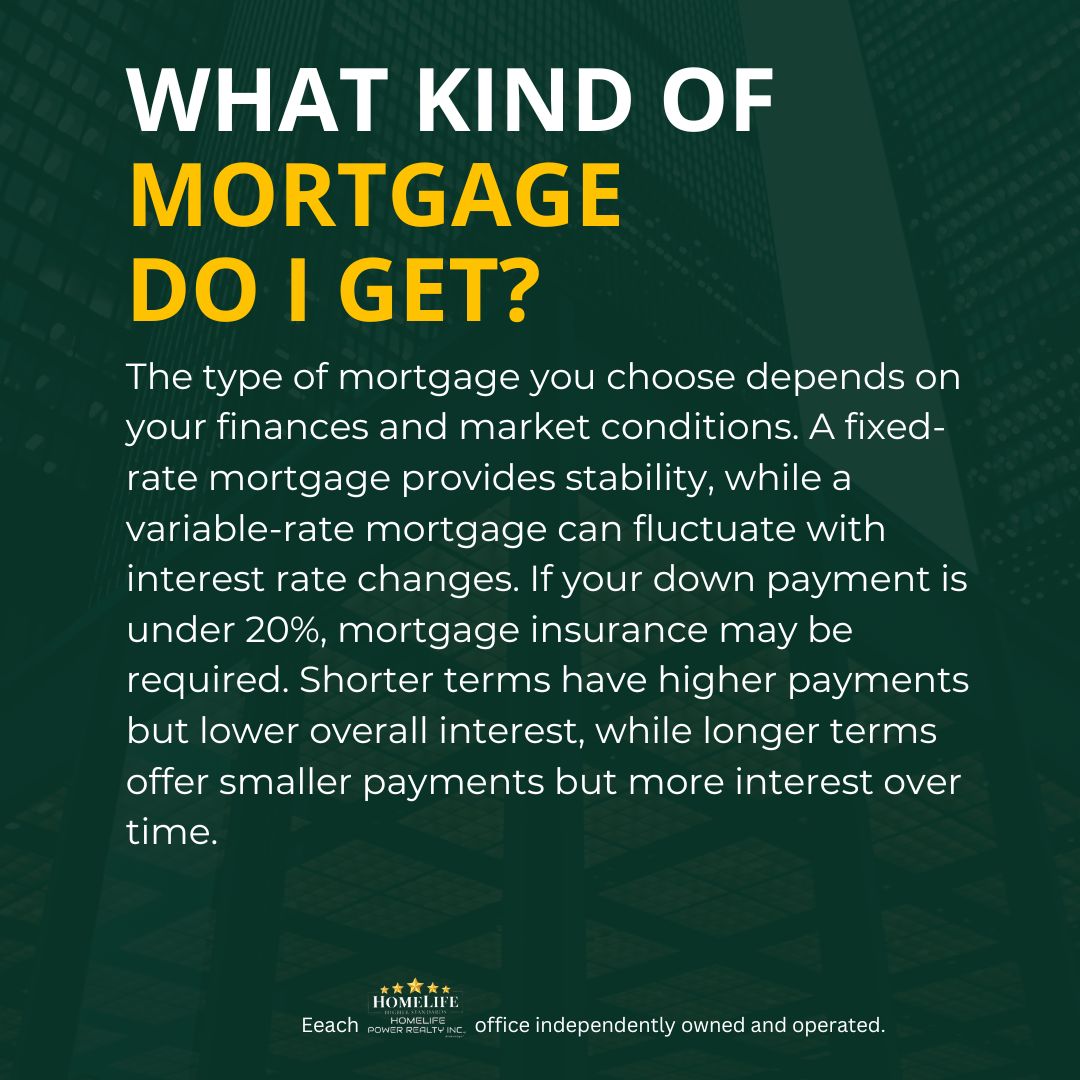
Fixed-Rate Mortgage: A fixed-rate mortgage is the most popular type of mortgage in Ontario. With this type of mortgage, your interest rate remains the same throughout the life of the loan. This provides stability, as your monthly payments will never change. Fixed-rate mortgages are ideal if you plan to stay in your home for a long time and prefer predictable payments.
-
Variable-Rate Mortgage (or Adjustable-Rate Mortgage): A variable-rate mortgage (often referred to as an ARM) has an interest rate that can change over time based on market conditions. Typically, the interest rate will be lower at the outset, but it can increase or decrease in the future. If you're planning to sell your home or refinance in the next few years, a variable-rate mortgage might save you money in the short term.
-
High-Ratio Mortgage: In Ontario, if you’re putting less than 20% down on your home, you’ll need to get mortgage default insurance from the Canada Mortgage and Housing Corporation (CMHC) or another insurer. This is called a high-ratio mortgage. While this adds to your overall mortgage cost, it allows you to buy a home with a smaller down payment.
-
Conventional Mortgage: A conventional mortgage is a standard mortgage where you provide a down payment of 20% or more of the property’s value. In this case, you don’t need to pay for mortgage default insurance, and the lender assumes less risk. This type of mortgage is a good option if you have a substantial down payment saved up.
-
FHA Loans (For First-Time Homebuyers): While FHA loans are not available in Canada, Ontario has similar options for first-time homebuyers. The First-Time Home Buyer Incentive, for example, provides a shared equity mortgage with the government, which can help reduce your monthly payments. There are also provincial programs for first-time buyers that offer down payment assistance or tax credits.
-
Home Equity Line of Credit (HELOC): A HELOC allows you to borrow against the equity in your home. It’s not a traditional mortgage, but it’s a popular option for homeowners in Ontario looking to access extra funds for renovations or debt consolidation. A HELOC has a variable interest rate, and you can borrow and repay as needed, making it a flexible financing option.
Learn more about mortgages here. At Homelife Power Realty Inc., we understand that buying a home is one of the most significant financial decisions you'll make, and choosing the right mortgage is a critical part of that process. Whether you’re just starting to think about buying a home or you're ready to take the plunge, we’re here to help you make informed decisions every step of the way.
If you have any questions about mortgages or need help navigating the home-buying process, don’t hesitate to reach out to us. Our team of experts is here to assist you with finding the perfect property and securing the financing that works best for you.
Let us help you turn your dream home into a reality!
Book your appointment by calling 519-885-8810. For further information, email us at info@homelifepower.com or visit www.homelifepower.com